- Family :
Acanthaceae
- Botanical Name :
Acanthus ilicifolius L.
- Common Name :
- Habit :
Shrub
- Habitat :
Terrestrial
- Synonym :
- Locality :
Sundarban National Park
- Altitude :
- Collection Number :
4762
- Accession No. :
WII000001
- Date :
2025-03-16
- Collected By :
WA Rodgers
- Det :
- State :
- Country :
India
Is this misidentified or you want to suggest any modification, click here
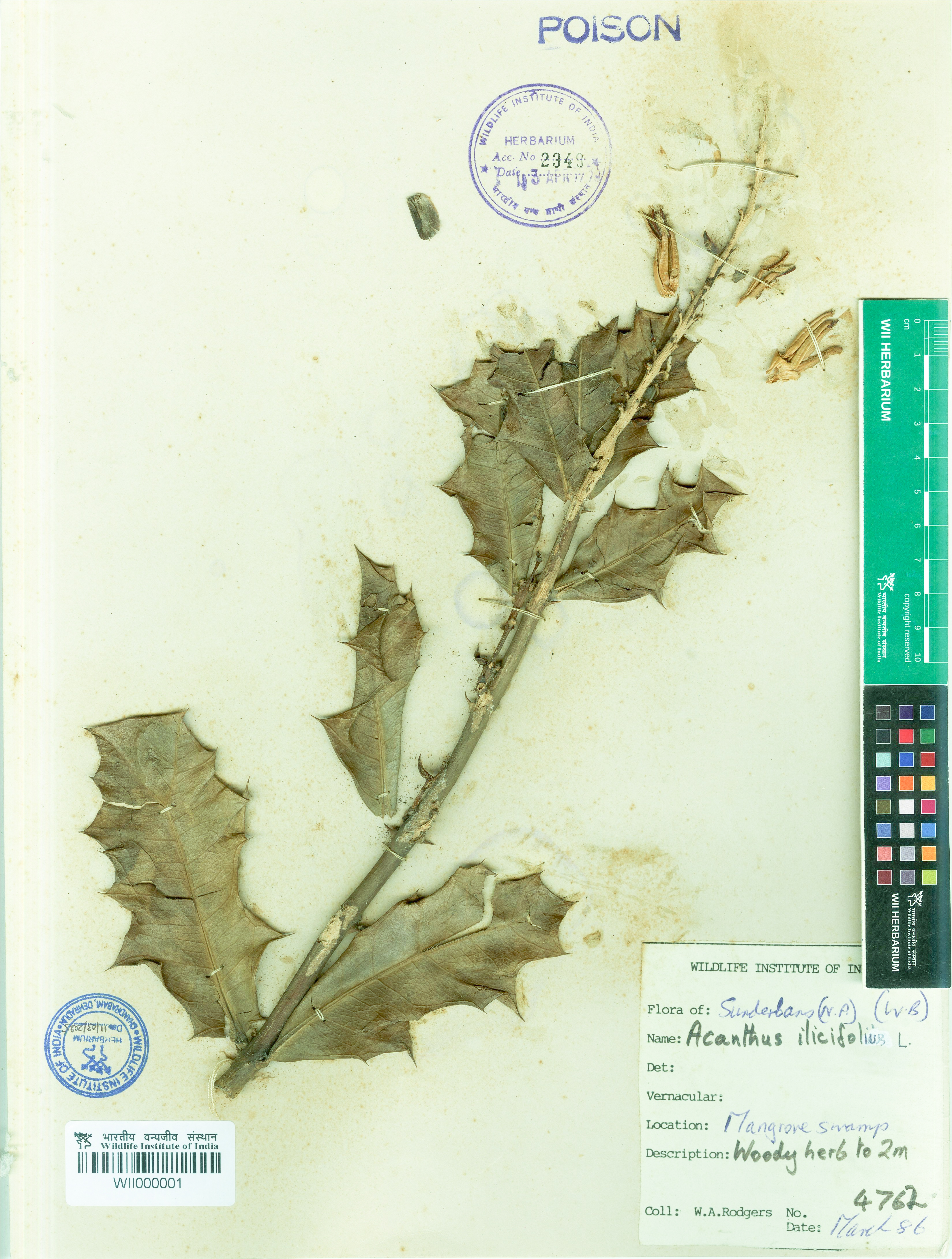
Acanthus ilicifolius
Acanthus ilicifolius (Acanthaceae) have been used to treat rheumatism, asthma, paralysis, soriasis and leucorrhoea (Kirtikar and Basu, 2001); anti-inflammatory, antioxidant, anti leishmanial, osteoblastic, hepatoprotective, anticancer, anti ulcer and antimicrobial activities (Ganesh, 2010). The plant possesses anti-inflammatory, antioxidant, anti leishmanial, osteoblastic, hepatoprotective, anticancer, anti ulcer and antimicrobial activities (Ganesh, 2010). Folklore claims for this plant are as aphrodisiac, blood purifier, diuretic, for treatment of asthma, diabetes, dyspepsia, hepatitis, leprosy, neuralgia, paralysis, ringworm, rheumatism, skin diseases, snakebite, stomach pains, leucorrhoea, leukemia (Mastaller, et al., 1997 and Bandaranayake, 2002). Tea brewed from the leaves relievespain and purifies blood (Mastaller, et al.,1997). A decoction of the plant with sugarcandy and cumin is used in dyspepsia withacid eructations. Leaves are bruised andsoaked in water for external application and are also used as an expectorant. It is also considered to be a diuretic and it is used as a remedy for dropsy and bilious swellings (Chakraborty, et al., 2007). In Ayurveda, the plant is known as Sahachara. According to Nadkarni the drugis astringent and makes a good nervinetonic, expectorant, and stimulant. He says that the root is expectorant, and is used in coughs and asthma. The root, boiled in milk, is largely used in leucorrhoea and general debility. Loureiro says that the Siamese and Indo-Chinese consider the roots to be cordial and attenuant, and useful in paralysis and asthma. The tender shoots and leaves are used in India for bite. In Goa, the leaves, which abound in mucilage, are used as an emollient fomentation in rheumatism and neuralgia (Mastaller, 1997). It is widely believed among mangrove dwellers that chewing the leaves will protect against snake bite.